Customer Segmentation Prompts That Require Evidence

Useful customer segmentation prompts ask AI to propose groups from supplied data, explain the evidence, and flag what remains unproven. They should produce testable segment rules, not confident stories about customers’ personalities.
ChatGPT and Claude can organize purchase records, interviews, and product events. However, a convincing label doesn’t prove that a segment exists or needs different treatment.
Start with the decision your team needs to make, then give the model clear evidence boundaries.
Key Takeaways
- Separate recorded behavior, customer statements, and hypotheses in every output.
- Build segments around two or three relevant dimensions, then assign a campaign action and owner.
- Validate membership rules and incremental results before expanding a campaign, while keeping customer data inside approved environments.
Seven Segmentation Types and When to Use Them
Customer segmentation groups existing customers by shared characteristics or behavior. Market segmentation covers potential buyers across a broader market.
Segmentation is the foundation for personalized marketing. Targeting decides which groups to pursue and how much to invest in each.
The traditional four variables are demographic, geographic, psychographic, and behavioral. Three additional segmentation strategies help organize business buyers and customer priorities for decisions.
| Type | Definition | Application and next action |
|---|---|---|
| Demographic | Recorded personal characteristics, such as age range. | Compare retention across voluntarily supplied age bands; test relevant creative without stereotyping. |
| Firmographic | Company characteristics, including industry and size. | Group SaaS accounts by employee range; tailor onboarding to team complexity. |
| Geographic | Location or service territory. | Group buyers by shipping region; communicate relevant delivery options. |
| Behavioral | Observed purchases, engagement, or product use. | Identify repeat buyers past their reorder window; test a reminder. |
| Psychographic | Stated attitudes, interests, or preferences. | Use survey responses about sustainability; test supporting product information. |
| Technographic | Technologies an account uses. | Identify accounts with a confirmed CRM platform; explain compatible integrations. |
| Needs-based or value-based | Shared problems, desired outcomes, or economic value. | Group customers by stated setup needs or measured customer lifetime value; assign support or loyalty treatment. |
Behavioral segmentation describes what customers do, while demographic segmentation describes recorded characteristics. Geographic segmentation uses location, and psychographic segmentation relies on stated attitudes or preferences. None of these categories automatically explains motivation.
For needs-based groups, our customer interview analysis workflow helps preserve participant evidence instead of turning isolated comments into universal buyer personas.
Prepare an Evidence Pack Before Asking AI
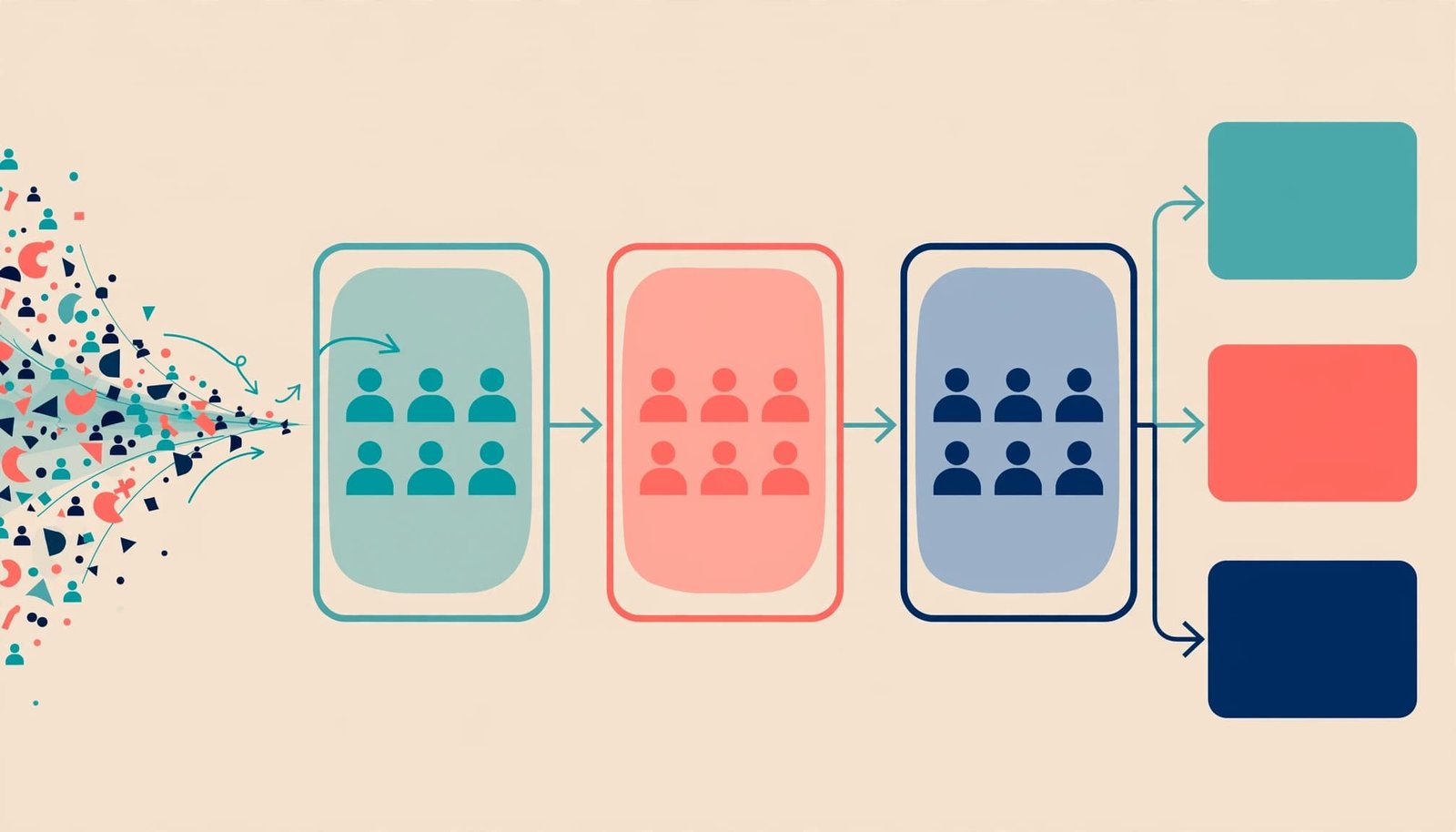
Prompt 1: Audit Sources and Gaps
Vero recommends combining CRM records, surveys, analytics, and social media data for customer segmentation, while following privacy and ethical standards. Before combining sources, confirm they use compatible customer identifiers, definitions, and observation periods.
Count distinct customers or accounts. Ten tickets from one customer aren’t ten independent observations.
Adaptable prompt
Act as a customer-insights analyst for [business]. Decision: [decision]. Approved evidence: [data dictionary, source extracts, dates, and population]. Audit identifiers, duplicates, missing fields, coverage, and conflicting definitions. Separate observed facts, customer statements, and hypotheses. Cite the source or field for every finding. Report sample findings separately from population claims. For missing evidence, propose a research method and owner. Don’t invent motivations, quotes, or causal explanations.
Preserve disagreements between interviews and analytics. A recorded completion event may not mean customers achieved their goal.
Set the Privacy Boundary First
Set data privacy boundaries first: use an approved environment and only the information required for the task. Remove unnecessary names, emails, credentials, and sensitive commercial details. Keep identity mappings separately.
Neutral IDs reduce exposure but don’t guarantee anonymity. A rare role combined with location and contract timing can still identify someone.
A paid account or disabled training setting doesn’t establish permission to process records. Collection notices, contracts, access controls, and retention rules still apply.
Prohibit sensitive-trait inference, including health, ethnicity, religion, and political views. Ask customers about relevant needs rather than guessing them from names or clicks.
Choose RFM, Lifecycle, or Account Tiers
RFM and Lifecycle Models for Customer Behavior
RFM scores recency, frequency, and monetary value, usually from 1 to 5. More recent purchases receive higher recency scores; frequent purchasing and higher spending receive higher corresponding scores. A 5-5-5 customer is a champion.
Use RFM analysis when repeat transactions provide meaningful differences. Define the observation window, net-spend treatment, and scoring cutoffs before assigning scores. Quintiles can be useful, but tied values need explicit handling.
A practical VIP rule is a purchase within the last 30 to 90 days, three or more orders, and membership in the top spend tier. Select the recency window using actual purchase cadence.
Lexer’s Black Diamond case study describes behavioral and RFM segmentation for higher-value and lapsed customers.
Lifecycle segmentation suits onboarding, activation, renewal, and churn. Define each stage using observable events. Our evidence-first journey mapping guide helps distinguish today’s behavior from proposed experiences.
Account Tiers for B2B Investment
A common approach assigns account tiers, with Tier 1 covering 10 to 50 accounts that receive 1:1 treatment. Tier 2 receives 1:few plays; Tier 3 receives 1:many automation. These account tiers are planning conventions, not proof of account value.
Use verified fit, buying signals, and sales capacity to assign account tiers.
Abmatic estimates that about 95% of visitors don’t submit forms. That vendor estimate highlights an identity gap: anonymous browsing signals don’t prove that a particular person or account is interested.
For unsupervised clustering, inspect inputs, test stability across samples, and require a practical interpretation before adopting the groups.
Customer Segmentation Prompts for Defensible Rules
Prompt 2: Propose Actionable Candidates
Build proposed customer segments around two or three decision-relevant dimensions: one fit dimension, one behavior dimension, and optionally one context dimension. For example, combine company size, activation status, and renewal timing rather than ten loosely related attributes.
Adaptable prompt
Using only [approved dataset or calculated summaries], propose up to [number] segments for [business decision]. Use one fit dimension, one behavior dimension, and optionally one context dimension. Return exact inclusion and exclusion rules, source fields, observed customer counts, coverage, overlaps, and missing evidence. Label each explanation as observed evidence or hypothesis. Name each segment after its proposed action. Don’t infer sensitive traits. If counts aren’t supplied or computable, write “not calculated.”
Names such as “Help stalled administrators activate” connect membership to a decision more clearly than “Busy Brenda.”
Prompt 3: Challenge the Proposed Segments
A segment needs to be measurable, substantial, accessible, and actionable. These practical tests reflect the discipline in Harvard Business Review’s segmentation primer.
Adaptable prompt
Review [candidate segment rules] against [business objective, minimum reporting base, channel permissions, budget, and capacity]. Assess measurability, sufficient size or value, reachability, and distinct actionability. Flag arbitrary thresholds, leakage, overlapping membership, small samples, and unsupported explanations. For each weakness, identify evidence needed and a test. Don’t approve a segment solely because its description sounds plausible.
For a high-LTV demographic segment, calculate value first. Then assess voluntarily supplied demographic fields, acquisition channel, and tenure. An association doesn’t establish that a demographic characteristic caused higher value.
Turn a Churn-Risk Segment Into a Campaign
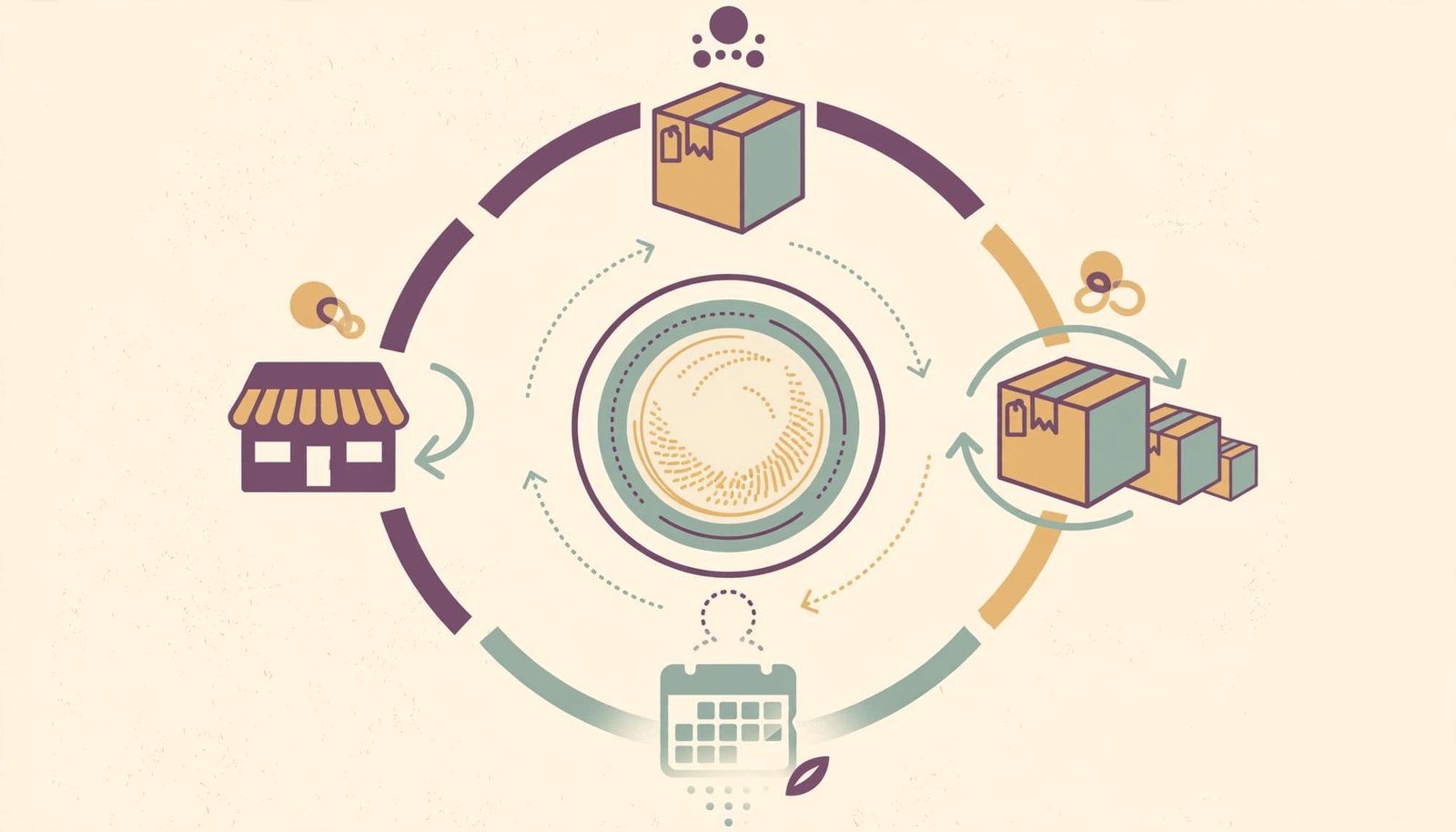
Use reorder timing from comparable repeat buyers. A replenishable product and a durable item need different windows. Also distinguish delayed purchasing from cancellation, seasonality, and tracking gaps.
Calculate reorder intervals in SQL, Python, or your analytics platform. Ask AI to explain the resulting summaries, not invent a churn threshold.
Adaptable prompt
Business: [business and product category]. Evidence: [reorder interval distribution, customer counts, last-order dates, and exceptions]. Propose a churn-risk rule using the observed reorder window. Explain the threshold’s evidence and uncertainty. Exclude [ineligible customers]. Draft a three-touch win-back sequence with channel, message, offer, timing, suppression rules, and owner. Separate proposed actions from measured findings.
Use this sequence:
- Send a reminder connected to the customer’s previous purchase.
- Give a reason to return, such as relevant product information or a service improvement.
- Send an offer only when the first two touches fail.
Suppress later touches after a qualifying purchase. Otherwise, customers who already returned may receive unnecessary discounts.
For targeted campaigns, attach a distinct channel, message, offer, and owner to every approved segment. For win-back, email could carry the reminder, the message could address replenishment, and a lifecycle marketer could own the sequence. Permission and channel availability determine whether that treatment is accessible.
Validate Customer Segmentation Quality and Campaign Results
Prompt 4: Design an Incrementality Test
Validate membership rules against source records before launch. Then randomly assign eligible customers to treatment and holdout groups when feasible.
Adaptable prompt
Design a validation plan for [segment] and [campaign]. Inputs: [baseline rates, eligible population, buying cycle, campaign cost, and constraints]. Define the randomization unit, holdout treatment, primary outcome, guardrails, observation window, and decision rule. Flag contamination, seasonality, and sample-size limitations. Don’t invent baseline results, calculate unsupported significance, or claim causation from observational comparisons.
Track reactivation rate, conversion rates, repeat purchase rate after reactivation, revenue per recipient, and unsubscribe rate. Define reactivation as a qualifying purchase within the chosen window. Calculate conversion rates as recipients who complete a predefined qualifying action divided by all recipients assigned.
Measure customer retention by tracking repeat purchases among reactivated customers over a consistent follow-up period.
Revenue per recipient should include everyone assigned to the campaign, not only buyers. Track discount cost and margin too.
ECORN reports 10% to 15% higher revenue for companies tailoring marketing to segments, citing third-party research. Treat that claim as context, not an expected lift for your campaign.
Revalidate When Customers or Data Change
A practical starting schedule is monthly monitoring and quarterly rule review. Review sooner after pricing, product, acquisition, or tracking changes.
Inspect membership size, overlap, source coverage, and response differences. For clusters, repeat stability tests on new samples. Suppress small groups when reporting could mislead or expose customers.
Keep a version record containing the prompt, model, data window, rules, approvals, and campaign results. Older evidence may no longer describe the current product experience.
Frequently Asked Questions
What is customer segmentation?
Customer segmentation groups existing customers by shared characteristics or behavior. Market segmentation covers potential buyers across a broader market.
What evidence should a customer segmentation prompt use?
Use approved records, surveys, interviews, or product events with clear sources, definitions, and observation periods. Ask the model to separate observed facts, customer statements, and hypotheses, and to identify missing evidence.
When should a business use RFM segmentation?
RFM is useful when repeat transactions show meaningful differences in recency, frequency, and monetary value. Define the observation window, net-spend treatment, and scoring cutoffs before assigning scores.
How should a business validate customer segments?
Check that membership rules match source records, then test eligible customers against a holdout group when feasible. Track predefined campaign outcomes and review segment size, overlap, and source coverage as data or business conditions change.
Conclusion: Keep Segments Tied to Decisions
Strong customer segmentation prompts make every proposed group traceable to records, statements, or explicitly labeled hypotheses. The useful output is a rule your team can inspect and test.
Start with a limited evidence pack, choose a model that fits the buying cycle, and validate the resulting action. Measured differences should guide investment, while unresolved motivations remain research questions.