What Is a SIPOC Diagram? A Consultant’s Guide
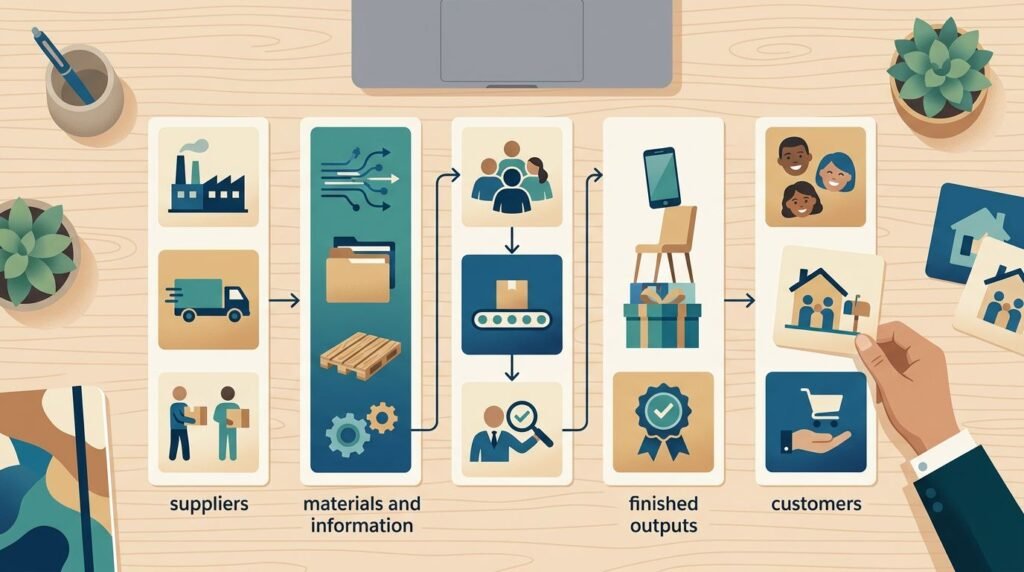
A SIPOC diagram maps a workflow on one page using Suppliers, Inputs, Process, Outputs and Customers. Consultants use it to agree process boundaries before investigating problems or proposing changes.
It helps clients see what enters a process, what happens, and who receives the result. Start with that shared view before mapping individual tasks.
What a SIPOC diagram shows
The five elements
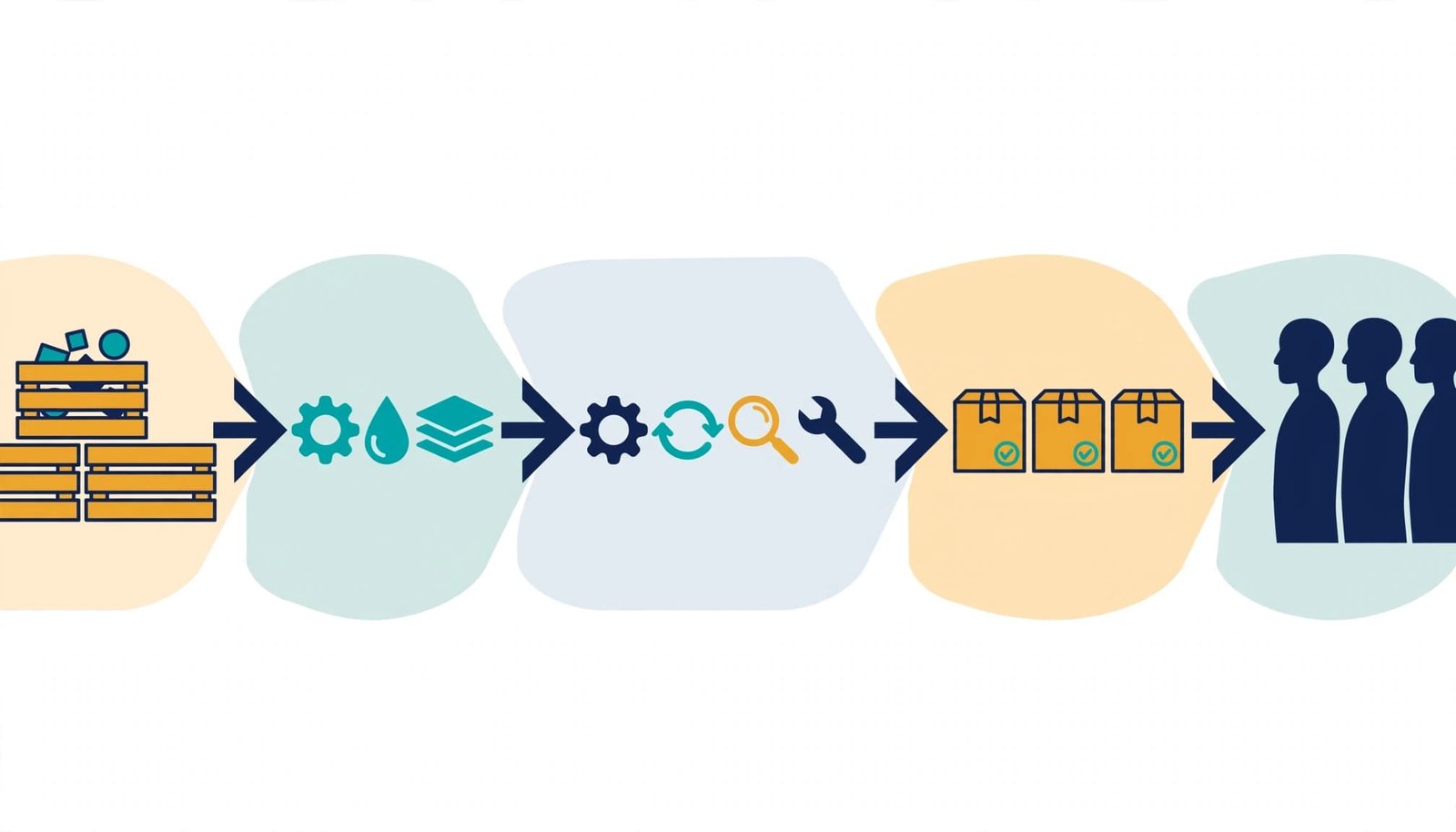
Suppliers provide inputs. Inputs include materials, resources and information, the three categories described by 6sigma.us. The process transforms those inputs into outputs, which internal or external customers receive.
Keep suppliers distinct from inputs: a dairy supplies milk; the dairy isn’t itself an input. An output is the delivered result, while the customer receives it.
Where the detail stops
A SIPOC diagram is a high-level process map. In process mapping, it establishes an overview before you document the process in greater detail.
A detailed workflow diagram, such as a flowchart, captures task dependencies, branching decisions and operational exceptions. Use a consulting dependency map when the question concerns what each workstream needs before proceeding. SIPOC first establishes the boundary for that analysis.
When consultants should use SIPOC
Establish scope before diagnosis
Use SIPOC during discovery, cross-functional team workshops, onboarding or improvement scoping. It creates shared understanding and can reveal missing inputs, redundant outputs or overlooked stakeholders.
In Six Sigma, it usually belongs in DMAIC’s Define phase. An ASQ Quality Progress example follows that placement. Kanban Tool places it in Measure; establish scope early and revisit the map as evidence develops.
Start with customer requirements when needed
COPIS uses the same elements but starts with Customers and works backward. Use it when teams understand their activities better than the outcomes customers need.
Capture the Voice of the Customer through interviews, surveys or focus groups. Then connect requirements to outputs and required inputs. Teams use SIPOC in Lean Six Sigma and Lean management, but it also supports process improvement outside these approaches, including consulting delivery and service redesign.
How to create a SIPOC diagram
- Set the boundary. Define the process boundaries by naming the process, its starting trigger and endpoint. This follows the ASQ handbook’s Define-phase scoping guidance. Keep the process being mapped separate from the project’s scope and the engagement’s contractual scope.
- Identify customers and outputs. Include internal and external customers, including recipients inside the organization and paying customers. Write down what each recipient needs and how they judge acceptance.
- Draft the process. Aim for four to eight high-level process steps, written as verb-noun phrases such as “grind beans” or “prepare shipment.” Some guidance allows up to 10. Group small tasks rather than treating that ceiling as a target.
- Add inputs and suppliers. Match each necessary input to its source. Include information, capacity and equipment alongside physical materials. Involve frontline staff so informal handoffs don’t disappear.
- Validate and simplify. Compare the draft with actual records and practitioner accounts. Preserve discrepancies rather than forcing a tidy story. Remove unnecessary detail, then obtain named process-owner approval.
Ryzer recommends paper, a whiteboard or a digital whiteboard rather than spreadsheets during drafting. The collaboration matters more than the software.
If AI organizes workshop notes, restrict it to approved source material. Our AI workflow mapping guide explains how to separate draft diagrams from validated operating documentation.
A concise coffee-making SIPOC example
Ryzer’s coffee example makes the five categories concrete.
| Element | Coffee-making example |
|---|---|
| Suppliers | Toby’s Estate supplies beans; milk and water suppliers provide other ingredients. |
| Inputs | Beans, milk, water, espresso equipment and preparation instructions. |
| Process | Grind beans; extract espresso; warm milk; combine ingredients; serve coffee. |
| Outputs | Prepared coffee ready for service. |
| Customers | The person receiving the coffee. |

Its specified quantities include 43 grams of beans, 150 ml of milk warmed to 60-65 degrees Celsius, and about 50 ml of espresso per cup. These are example specifications, not universal brewing rules.
For a business comparison, Asana’s shipping example covers customer checkout, sending the invoice to the warehouse, preparing the shipment, carrier collection and delivery. Both examples retain an end-to-end view without documenting every task.
Turn the map into focused analysis
Prioritize inputs tied to important customer requirements. Evidence of variation or failure can focus root cause analysis, and a Cause and Effect matrix can structure that assessment.
Next, an Input/Output Map adds detail to process relationships. FMEA examines potential failures and their consequences.
ASQ’s SIPOC+CM adds Constraints and Measures, producing seven blocks. Use those additions when restrictions or performance definitions need to remain visible.
Agreement in a workshop establishes a shared description, not proof that work consistently follows it.
Where reliable event logs exist, process mining can compare recorded activity with the map. Document skipped approvals or rework before turning the diagram into an SOP.
Key Takeaways
- Use SIPOC to agree scope and customer-facing outcomes before detailed diagnosis.
- Keep the map high-level, then validate it against operational evidence.
Frequently Asked Questions
Is SIPOC only for Six Sigma projects?
No. Consultants can use it to scope business processes without adopting Six Sigma or running a formal improvement program.
How does SIPOC differ from DMAIC?
DMAIC is an improvement method: Define, Measure, Analyze, Improve and Control. SIPOC is one mapping tool that can support that method.
Start with boundaries, then investigate
A useful SIPOC diagram gives the team an agreed boundary for investigation. Its value depends on clear inputs, meaningful outputs and visible customer requirements.
Keep detailed workflow logic separate. Then use evidence and process-owner review to turn the shared picture into dependable analysis.