AI Win-Loss Analysis With CRM and Interview Data

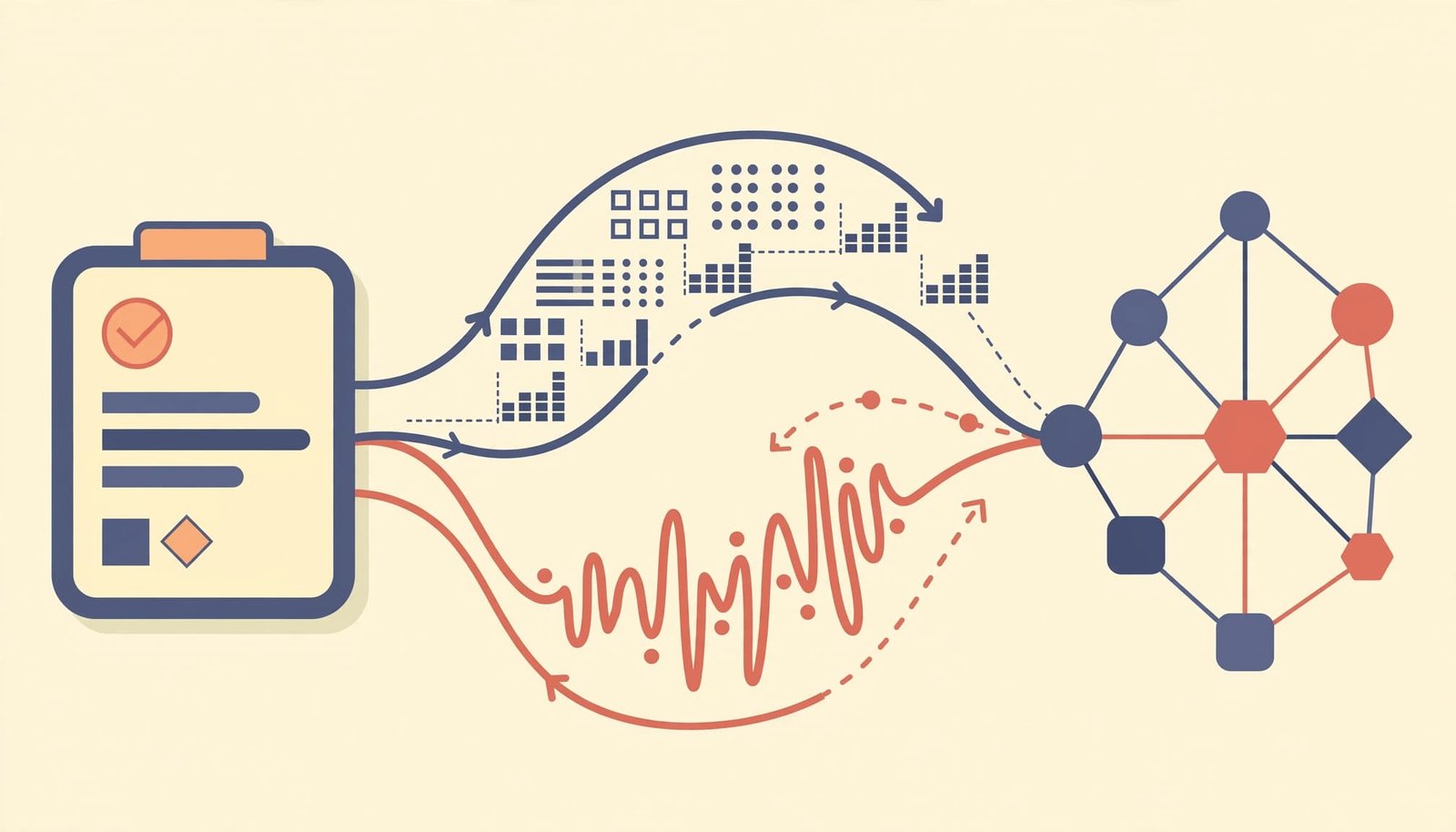
In win/loss analysis, combine deal records with buyer interviews to explain deal outcomes: why opportunities close, stall, or go elsewhere. CRM data shows the pattern; buyer evidence helps explain it.
The practical challenge is connecting those sources without turning rep guesses or AI summaries into facts. Start with a defined sales decision, then build an evidence trail from each finding to the underlying deal and interview.
Key Takeaways
- Join CRM records and interviews using stable opportunity IDs, while keeping conflicting accounts visible.
- Use AI for coding and comparisons, but retain human review of evidence and calculations.
- Turn findings into owned experiments with defined metrics, rather than distributing another loss-reasons dashboard.
Why CRM Loss Reasons Need Buyer Context
CRM loss reasons show patterns, but buyer feedback captures buyers’ explanations. Reps often select a convenient closed-lost reason because the CRM requires one. “Price” may reflect a buyer’s polite explanation, a rep’s interpretation, or an actual budget constraint.
Corporate Visions reports that sellers and buyers give different reasons for outcomes 50% to 70% of the time, drawing on more than 100,000 B2B purchase decisions. Its comparison of conversation intelligence and win-loss research explains why sales conversations alone leave gaps.
Therefore, preserve three distinct categories: recorded events, buyer statements, and analyst hypotheses. A discount request is observable. Whether price caused the loss requires further evidence.
Prepare CRM and Interview Data Before Analysis
Build a consistent deal table
Use one row per opportunity, with account and opportunity IDs, outcome, decision date, segment, competitor, deal value, discount, cycle length, and rep-entered reason. Keep no-decision outcomes separate from competitive losses.
Deduplicate records, standardize currencies, and distinguish unknown amounts from zero. Reconcile counts and totals against a dated CRM report. AI can flag suspicious records, but it can’t establish that an export is complete.
Store interviews separately and join them through opportunity IDs. Multiple interviewees from one deal shouldn’t inflate the number of independent buying decisions.
Establish privacy and source controls
Use an approved AI environment. Remove unnecessary names, contact details, credentials, and contract terms. Keep the identity mapping outside that workspace.
Before recording, disclose the interview’s purpose, AI involvement, recording, access, and retention arrangements. Obtain the required consent.
Retain source dates and transcript timestamps. If procurement’s explanation contradicts the rep’s note, preserve both accounts and assign a reviewer instead of asking AI to reconcile them automatically.
Trigger Buyer Interviews After Closed Deals
Automate invitations, then monitor participation
A Salesforce or HubSpot closed-lost update can trigger an eligibility check and an invitation to AI-moderated interviews or a researcher-led conversation. Send a reminder three business days later, followed by a final email three days after that. Apply a comparable workflow to closed-won deals, and monitor participation throughout.
Complete post-decision interviews within three months of the decision. Start sooner for complex purchases while participants remember evaluation details. Pragmatic Institute’s win-loss guidance also recommends balanced won-and-lost feedback.
Aim for equal completed interviews across wins and losses to reduce outcome imbalance. Equal counts alone don’t establish statistical validity. Report invitation and completion rates by outcome, segment, and buyer role to expose participation bias.
Use neutral questions and consistent scales
Product marketers, product team members, or independent researchers should own interviews. Sales reps shouldn’t conduct them alone because relationship concerns and upselling can inhibit candor.

Ask, “What changed between your shortlist and final decision?” Follow with, “Which requirement eliminated an option?”
Combine free-form answers with consistent measures, such as 1-10 satisfaction ratings or rankings of five decision factors. Ask what buyers actually considered, rather than presenting your preferred explanation for agreement.
Combine CRM Patterns With Interview Evidence
Code interviews against a shared framework
Start with categories such as business need, product fit, implementation, commercial terms, trust, and competitive differentiation. Allow new themes, but define them before applying them across interviews.
Use AI to suggest codes, then link each win-loss data finding to its opportunity ID and supporting passages in the transcript. Have a researcher inspect ambiguous statements and a sample of routine coding. Our interview transcript analysis workflow preserves this boundary between generated summaries and research evidence.
A reusable prompt is:
Analyze only the approved deal table and transcripts. Report each theme with opportunity IDs, supporting quotations, timestamps, and distinct-deal counts. Separate observations, buyer explanations, and hypotheses. Preserve contradictions. State missing evidence and avoid causal claims.
Investigate patterns within comparable deals
Ask whether “price” losses cluster around implementation concerns, whether enterprise buyers raise security objections more often, or whether a competitor wins despite a higher quote.
Compare similar segments, contract sizes, and decision periods. Calculate win rate as wins divided by decided opportunities, stating how no-decisions are handled.
Report how many interviewed deals support each theme alongside the eligible population. Recalculate material results in SQL, Excel, or Python. Ten mentions from one buyer aren’t ten independent observations, and association doesn’t prove causation.
Choose AI Win-Loss Analysis Software by Workflow
The useful distinction is where each tool gets its evidence.
| Tool category | Examples | Best fit | Main limitation |
|---|---|---|---|
| AI-moderated buyer interviews | User Intuition | Ongoing post-decision research | Requires access to actual buyers |
| Competitive intelligence with win/loss | Klue | Connecting buyer findings to competitive messaging | Depends on research scope and participation |
| Conversation intelligence | Gong | Reviewing objections and sales execution | Captures sales conversations, not independent post-decision explanations |
Choose the evidence source before comparing dashboards.
Klue acquired DoubleCheck Research in January 2023 to expand its win/loss capabilities. Meanwhile, Clozd and Primary Intelligence offer dedicated win-loss programs for teams seeking research support alongside software.
ChatGPT and Claude can help synthesize approved exports, but they don’t recruit lost prospects or establish sample quality. Revenue intelligence platforms may organize CRM and sales-activity signals, but they don’t replace independent buyer interviews. A research panel can’t substitute for people who participated in your actual deals.
When evaluating win/loss software, check for multilingual support, transcript-level evidence, CRM joins, consent controls, and researcher review. Also distinguish buyer interviews from tools that interview sellers about deals, because those answer different questions.
Compare Full Program Costs, Not Interview Fees
Traditional agency programs can cost up to $20,000 for 20 interviews, according to estimates reported in Forbes. Scheduling and batch reporting can also deliver findings after the relevant sales play has changed.
Budget assumptions commonly include 30-minute human interviews with $100 to $150 incentives. Shorter AI interviews may use $25 to $50 incentives, although seniority and recruitment difficulty affect participation.
As of November 2026, User Intuition’s published Starter pricing lists quality voice interviews at $30 using your sample or $60 with standard panel recruitment. Specialty recruitment and buyer-arranged incentives cost extra. The provider advertises more than four million panelists and support for over 80 languages.
Those published rates supersede older estimates around $20 per conversation and narrower language counts.
Clozd and Primary Intelligence don’t publish per-interview prices. Circulating third-party agency estimates put Clozd managed programs at $50,000 to $150,000 annually, with four to six weeks per batch. These aren’t verified quotes or delivery commitments.
Compare per-interview cost for each usable completed interview, including recruitment, incentives, integration, analysis, and review. An inexpensive invitation produces no buyer evidence when the recipient never participates. For a win-loss agency, separate service fees from software costs and the internal time needed to review interviews and implement changes.
Turn Findings Into Measurable Improvements
Give each team a decision-ready output
Sales needs objection guidance linked to buyer language and decision stages. Product marketing needs evidence to test claims, identify positioning gaps, sharpen competitive positioning, and set proof requirements. Product teams need requirement-level evidence showing affected segments and buying consequences.
Deliver a compact finding record with supporting opportunity IDs, counts, quotations, limitations, owner, and proposed action. A feature request shouldn’t become a roadmap priority merely because a large lost prospect mentioned it.
When pricing emerges, our client pricing analysis workflow helps separate discount patterns from evidence about price sensitivity.
Test changes against a defined baseline
For security-related losses, test earlier technical validation. For implementation concerns, test a scoped onboarding plan. These are investigation paths, not established explanations for your business.
Define the target segment, baseline period, comparison group, and success measure before launch. Track win rate alongside cycle length and discounting so one improvement doesn’t conceal another cost.
Use comparable decision cohorts, as in our customer cohort analysis approach. Keep interviews ongoing and present reviewed findings at least quarterly.
Afterward, compare outcomes with the original baseline and record competing explanations, including changes in deal mix. A stronger quarter alone doesn’t prove the intervention worked.
Frequently Asked Questions
Can AI replace human-moderated win-loss interviews?
AI can extend invitations across every eligible closed deal and handle routine interviews. That doesn’t guarantee universal participation. Keep human-moderated interviews for strategic enterprise losses, sensitive discussions, and follow-up requiring deeper probing. A hybrid program combines broad coverage with selective depth.
What should an AI interview pilot measure?
Measure acceptance, completion, usable-answer rates, researcher corrections, and cost per usable interview. Compare probing quality on the same research objectives. Don’t assume lost prospects respond equally well to AI and human interviewers; assess that question within your own recruitment process.
Make Every Finding Traceable to a Decision
Useful AI win-loss analysis connects deal patterns with buyer explanations without erasing uncertainty. Its strongest output is a traceable decision, supported by records and interviews.
Start with one segment and one question. Reconcile the data, interview both outcomes, and test one supported change. Keep the evidence attached when reporting whether that change worked.