Turn Keyword Research Into AI Content Briefs

Effective keyword research provides the raw data for your site, but a list alone cannot tell a writer what a reader actually needs. It only hints at the specific language people use when they are searching for solutions.
Well-structured AI content briefs act as the backbone of a high-performing content strategy, helping you translate those hints into clear editorial instructions that consistently drive organic traffic. By connecting a search term to user intent, evidence, structure, and a useful next step, you streamline the entire content creation process. Start with the searcher in mind, and give your writers the direction they need to produce high-quality AI content briefs that result in something truly worth publishing.
Key Takeaways
- Organize your content strategy by creating topic clusters based on the actual search results, rather than focusing solely on similar wording.
- Clearly define the primary search intent in a single sentence before finalizing your outline to keep the content focused.
- Use AI to accelerate the research phase and data clustering, but always verify important claims manually to ensure accuracy.
- Provide comprehensive instructions that include required headings, common reader questions, internal links to support site architecture, and specific brand voice guidelines.
- Treat every finished brief as a formal editorial agreement between you and the writer, rather than a simple prompt for automatic publishing.
Start With Search Intent, Not a Keyword Export
A primary keyword is a starting point, but it is not a topic, a title, or a promise to the reader.
For example, “AI content brief template” could bring several audiences to the same page. A freelancer might want a downloadable structure, whereas an SEO manager could be looking for a repeatable workflow for a team. Because these groups represent a different target audience based on where they are in the buyer journey, their shared search phrase often masks completely different jobs. Understanding this nuance is key to identifying the correct search intent.
Open the current top results and look for patterns. Do the pages offer templates, tutorials, product pages, or comparisons? Review the titles, headings, SERP features, featured snippets, related questions, and the types of brands that rank. This work takes minutes, yet a well-defined content outline prevents an article from answering the wrong question or wasting your writer’s effort.
A useful brief begins with an intent statement such as:
The reader wants a practical, reusable format for creating search-intent-led content briefs with AI, not a list of AI writing tools.
That single sentence keeps the outline honest and helps you define the search intent early. It also tells the writer what to leave out. A tool comparison might be relevant as a short sidebar, but it should not take over an instructional article.
Next, cluster supporting terms by purpose. Queries such as “SEO content brief example,” “content brief template,” and “how to write a content brief” may belong in the same article if their results overlap. Conversely, a term like “best AI content brief generator” may require a separate commercial page because the searcher is actively choosing software.
Strong SEO content brief strategies also start with the gap between a generic topic and a reader’s actual need. Your SEO content brief should name that gap in plain language. Otherwise, AI will fill it with broad advice that could fit almost any blog.
Use AI for Research Support, Then Check the Work
AI can significantly reduce the tedious parts of the briefing process. You can provide it with a keyword export, a list of ranking URLs, customer interview notes, or Search Console queries to streamline your workflow. Use these inputs to conduct a thorough competitor analysis and perform a semantic analysis to group phrases by probable intent, extract recurring headings, identify question patterns, and flag topics that competitors often overlook.
That output serves as a research draft, not a source of truth. Even the most advanced content brief generator requires human verification because search results change based on location, device, and time. AI may misread a page, blend facts from different sources, or invent details that sound plausible. If a brief requires a specific statistic, product feature, quote, regulation, or date, a human editor must open the original source to verify it and provide the necessary information gain that AI cannot replicate on its own.
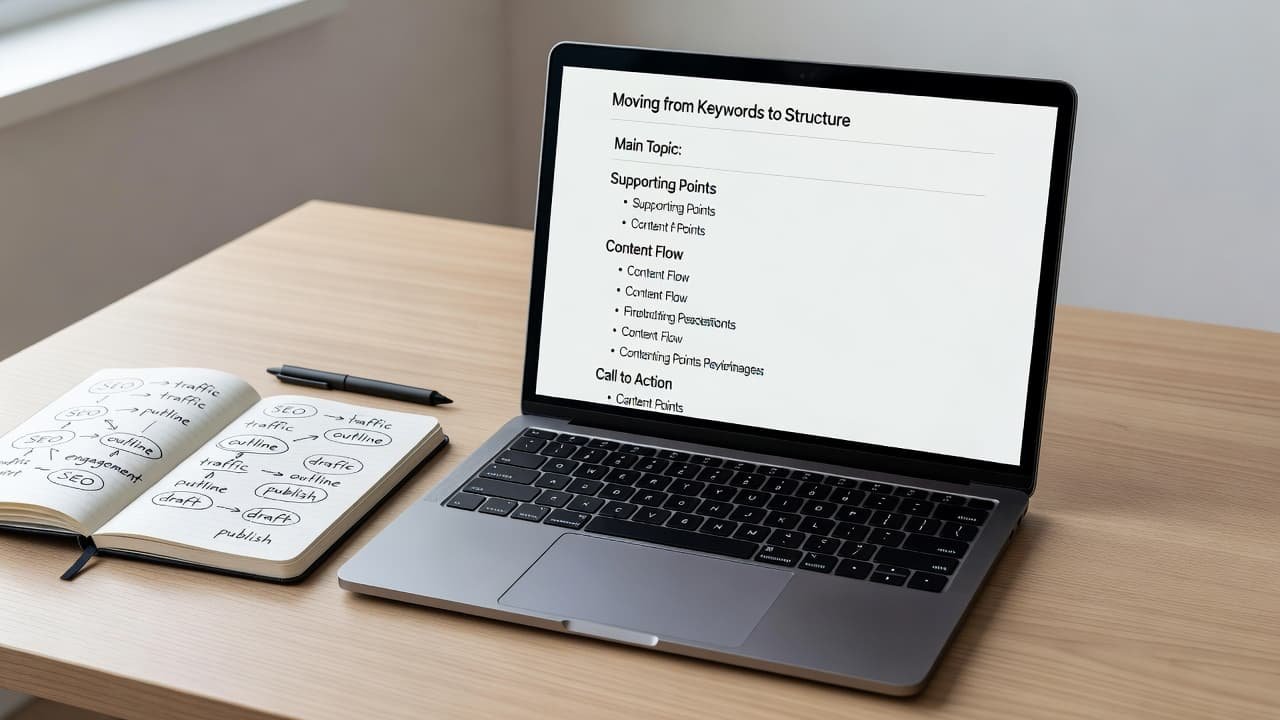
Keep the division of labor simple. AI can summarize patterns and propose structural options. A human editor decides what is accurate, relevant, distinctive, and appropriate for the brand.
Ask AI to return its research in a format you can easily audit:
- List each suggested section along with the ranking pages or source URLs that support it.
- Separate confirmed facts from ideas that require further review.
- Flag missing information instead of allowing the tool to guess.
- Identify reader questions using the exact phrasing people use whenever possible.
A practitioner discussion about AI-assisted content writing can also reveal where real workflows break down. Use those observations as prompts for your own investigation, not as primary evidence for factual claims.
Set negative constraints in the brief as well. Tell the writer not to invent studies, quote unnamed experts, claim a tool has features you have not personally checked, or use examples without a source. These boundaries often improve AI output more effectively than adding another twenty keywords to your prompt.
Build the Brief Around Decisions a Writer Must Make
A finished content brief answers the questions that cause rewrites later. It should tell the writer who the reader is, what they need, which sections are mandatory, and what proof belongs in each part. Focusing on these details is the best way to boost your team’s workflow efficiency.
Here is how one keyword becomes a comprehensive content outline.
| Brief element | Example instruction |
|---|---|
| Primary topic | “AI content brief template” |
| Search intent | Informational with a practical template need |
| Target audience | SEO specialists, editorial managers, and freelancers who already understand basic keyword research |
| Core promise | Show readers how to convert a keyword cluster into an assignment a human or AI writer can follow |
| Secondary keywords | Content workflow, AI writing tools, search intent analysis, SEO strategy |
| Required sections | Intent analysis, research validation, completed brief example, internal links, editorial review |
| Questions to answer | What does the reader want? Which terms belong together? What must a writer verify? |
| Evidence standard | Link to original sources for factual claims and identify any examples as examples |
| Style direction | Direct, practical, short paragraphs, no inflated claims or generic AI language |
The outline needs more than headings. Add a sentence under every major section explaining its job. For instance, explain how to separate informational terms from comparison terms when they share a root phrase. That instruction prevents a section called Search Intent from becoming a definition copied from a textbook.
Also assign a content angle. If leading articles focus on software features, your piece could focus on the editorial decisions that happen before anyone opens a writing model. The angle helps the draft offer a reason to exist.
Require a direct answer near the opening when the query asks a clear question. Search engines prioritize short, accurate responses that directly address user queries. Then support that answer with steps, examples, and evidence.
A discussion of writing better AI content can be useful for comparing workflow ideas. Still, your own brief needs clear requirements that match your readers and editorial standards through well-structured AI content briefs.
Add Internal Links and Editorial Rules Before Drafting
Internal and external links belong in the brief because they define the reader’s path through your site and provide necessary credibility. Waiting until the final publication phase often leads to awkward additions or missed opportunities to improve SEO.
For a robust content brief template example, the document should request specific internal links to a keyword clustering guide, a page of reusable AI writing prompts, and an article on editing AI drafts. Each link should support a moment in the reader’s decision process. A keyword research guide fits the research section, while an editing guide fits the review section. Include external links to authoritative studies or industry data to bolster your claims. Give the writer anchor text guidance, but do not dictate every sentence. Providing a prompt like “link naturally to the keyword clustering guide when explaining how to group terms by shared results” gives enough direction without producing stiff copy.
Editorial rules act as a core component of content optimization, ensuring that marketing teams maintain consistency across their production pipeline. These rules should cover the specific requirements that matter to your publication:
- Define the target audience, reading level, brand voice, tone, approximate length, and preferred formatting.
- List approved sources, required first-party examples, and claims that need an editor’s sign-off.
- Identify phrases, assumptions, or competitor references the draft must avoid.
- State the primary call to action, its importance, and exactly where it belongs in the flow of the content.
Finally, add a review gate. Check the draft against the brief before polishing the prose. Confirm that it meets the search intent, answers required questions, uses the assigned links, and supports factual statements. Then edit for repetition, unsupported advice, and sentences that say little.
This is where many AI content briefs earn their value. A good brief gives the draft a clear shape, and structured editorial review gives it the necessary credibility to rank and convert.
Frequently Asked Questions
Can AI replace the need for human input when creating content briefs?
AI is an excellent tool for clustering keywords, identifying recurring headings, and summarizing competitor research, but it cannot replace human judgment. A human editor must verify facts, ensure the content aligns with brand voice, and confirm that the search intent is accurately addressed to avoid generic output.
How do I know if I have correctly identified the search intent for a keyword?
Look for patterns in the current top-ranking results, such as whether they are tutorials, product comparisons, or listicles. If your proposed content doesn’t match the format and utility of these top results, you may have misidentified the user’s underlying goal.
What should I do if my article isn’t ranking well despite using a detailed brief?
If a piece underperforms, revisit your original intent statement to see if it was too broad or if you missed a key question common to the topic. Often, the issue lies in thin evidence or a misalignment between the assigned brief and the actual needs of the reader, rather than a failure of the writing itself.
Make Each Brief Better Than the Last
The best briefing process is repeatable, but it is not frozen. Keep a record of which outlines lead to fewer revisions, stronger rankings, useful internal link clicks, or better feedback from subject matter experts.
When a page underperforms, do not assume the writer failed. Revisit the original intent statement. The keyword cluster may have been too broad, the evidence may have been thin, or the brief may have ignored a question that appears across current results.
Clear instructions produce clearer drafts. A keyword becomes useful when you connect it to a reader, a search intent, verified information, and editorial judgment. By consistently refining your AI content briefs, you build topical authority over time. This structured approach helps search engines better understand your site value, which is the most effective way to drive long term organic traffic. Ultimately, integrating search intent and editorial rigor into your content strategy ensures that every piece you publish contributes to a cohesive and high performing library.